We start every year at Makom with curiosity. This year, we’re shaping that curiosity through action research. In this iterative process, we start by asking questions, informed by Makom Community’s pedagogy of Jewish Placemaking.
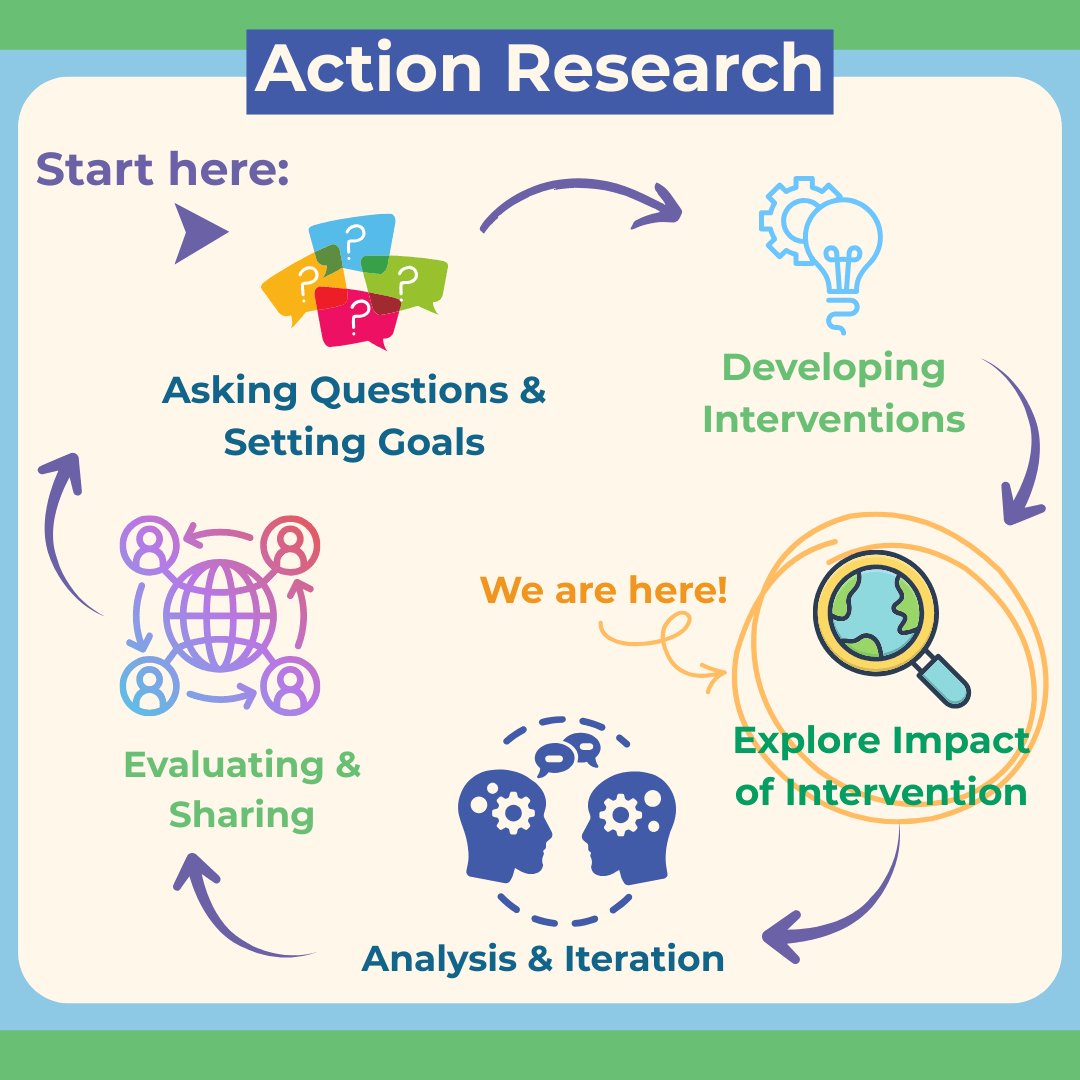
Our action research, like our pedagogy, is rooted in Makom Community’s goals and success criteria for Jewish Enrichment. Many of these goals pertain to learners’ individual and collective social and emotional skills, to how they and their families access and relate to Jewish Wisdom, and to how they engage with both Jewish and broader communities.
Our research structure consists of four questions, one per quarter, to help guide our educators as we support learners in developing skills, give them greater tools for connection and exploration of perspectives, and invite them to reflect and participate in this inquiry with us.
The first research question is: “How might an educator regularly build connections between text learning and interpersonal relationship building?” We started with wondering about the social and emotional skills our learners already have. Researchers noticed times when learners demonstrated one or more of the following:
- Self awareness
- Self management
- Responsible decision making
- Relationship skills
- Social awareness
Visit our LinkedIn for deep dives into how we define and use these terms, following our learning from CASEL!
Researchers noticed the many ways that educators build opportunities to practice these skills and support their development within each kvutzah’s (age cohort) TEXTploration block. Makom Community has a number of learning goals for Jewish Enrichment, which include emotional and relational skills, and the aims of each research question intervention align with and further these same goals. Educators aim to weave connections at least weekly between texts studied and interpersonal challenges observed in their classes/among their students. Even during our baseline stage before applying our intervention for the quarter, educators more than surpassed this goal!
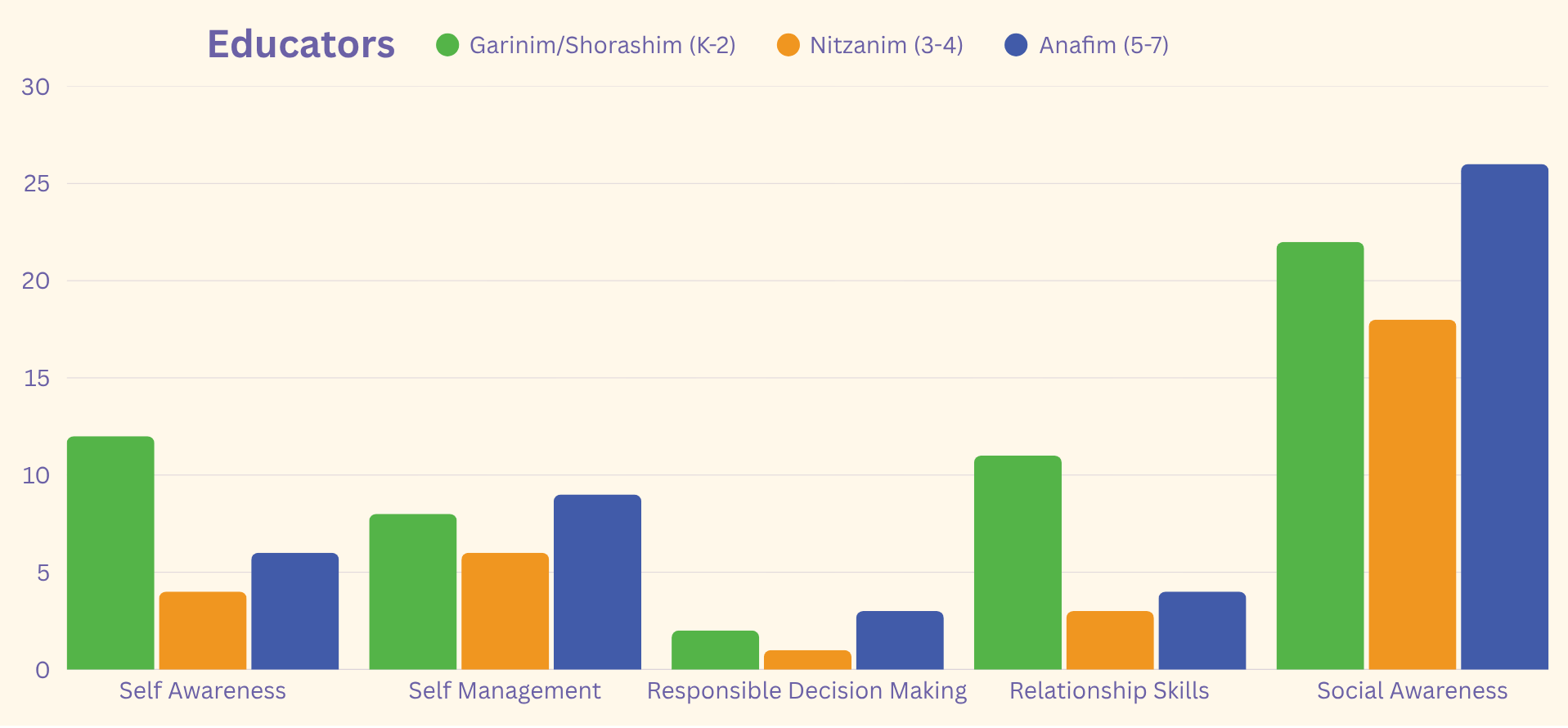
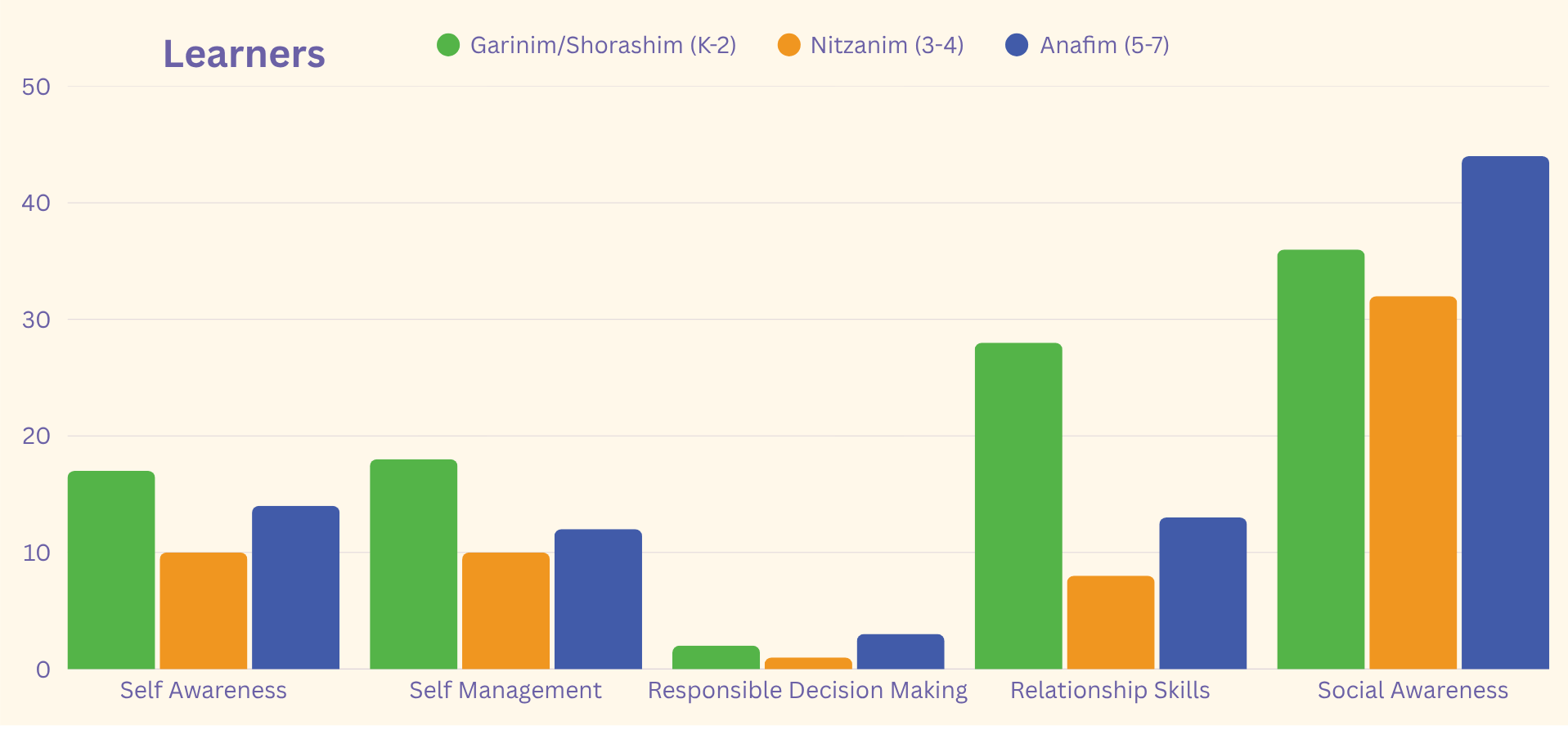
So what have we observed? Learners in every kvutzah have demonstrated each skill at least once. Social Awareness has been our most frequently observed skill. We’d hypothesized that this would be true for older learners, and our current data reflects that younger learners are right there with them!
Younger learners showed their social awareness skills when they asked why the collaborative building of a tower in the Migdal Bavel (Tower of Babel) story made God think people could do anything. And this question led to more wondering: about how powerful collaboration can be, and about how we judge the capabilities of others. Older learners compared and contrasted the roles and selection processes for kings and priests to those of leaders in their schools, city, and country.
The graphics below show which skills we’ve seen our learners demonstrate, and which skills we’ve seen educators actively support through classroom engagement. We’re excited to see and to share how we developed these skills together as we finish this unit.
What does this look like in practice? Here are a few examples of how our educators support and encourage our learners in developing these skills:
Educator: “How would you feel if we could all only agree and act as one?”
Learner: “How would you know how it would feel if it’s never happened?”
Educator: “I bet you can imagine that situation, and there is no right way to feel. Show me with your face if you don’t want to say it”
Learners answered: “Sad,” “unfair, cause it wouldn’t matter if it was your turn to say something.” They also expressed concern over privacy issues if everyone’s minds were synchronized, and made various faces.
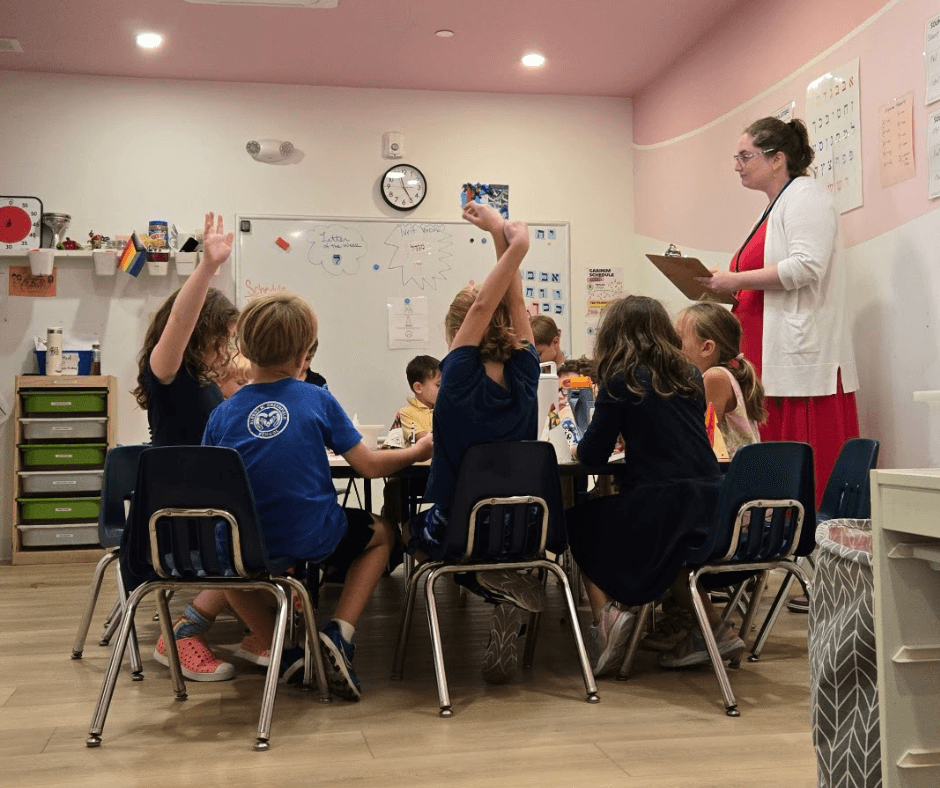
Educator: “Why does the text tell us that kings aren’t supposed to amass silver and gold?”
Learners’ answers included: That (amassing wealth) puts a king above the people. Being a leader doesn’t mean being better or better off than the people. Too much money gives the king more power/ability to bribe. Too much money and power is corrupting.
They directly contrasted the ideal leaders described in Torah with contemporary figures, and generally agreed with the idea that most of a king or leader’s resources and time should be spent on the good of the people. One learner also stressed that a leader, and all people, still need access to at least a baseline of resources, because people who are struggling are often not able to act on their best potential.
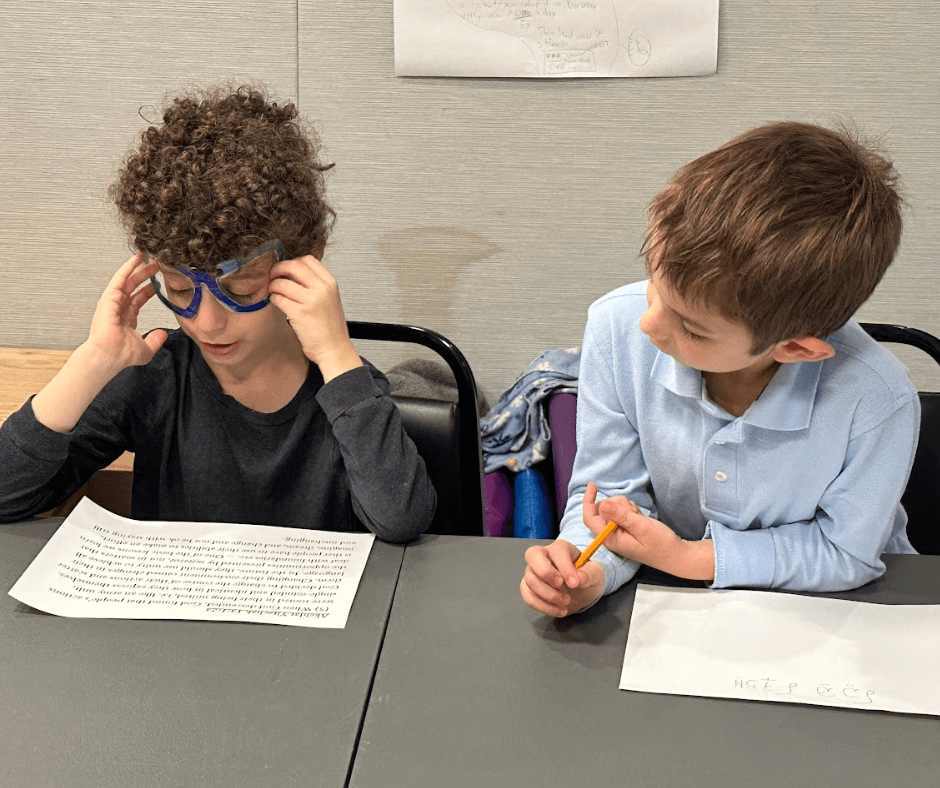
Educator: “How do we encourage people to share their opinions and create a space where they can?”
Learners: Don’t talk over them. Make eye contact or show in some other way that you’re paying attention. Respond to what they’re saying and add onto it to show that you understand, or ask questions if you don’t. Make sure there are lots of perspectives being shared in a space because it’s scarier and harder to share an opinion if it seems like everyone agrees with each other.
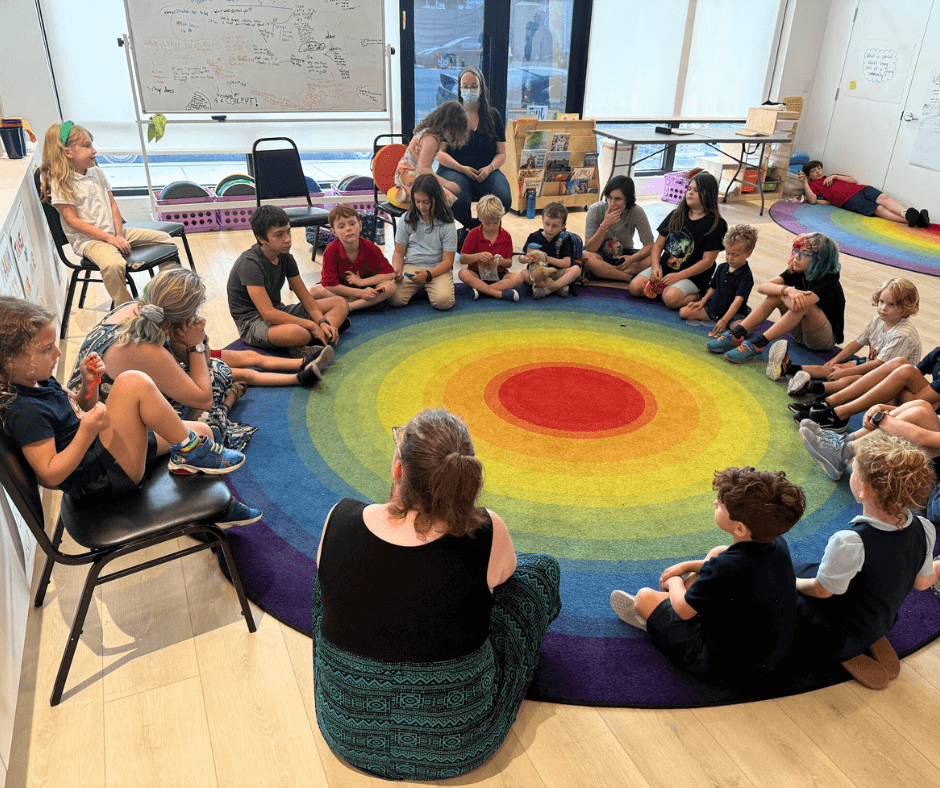
The findings from our research questions are integrated into our pedagogy of Jewish Placemaking, ensuring that Jewish Placemaking is a living pedagogy that responds to the evolving needs in our communities and among young families. Why is this important? Jewish wisdom is more than an hour of learning. It has the ability to anchor our learners and their families in life skills that exist in their homes, their schools, their communities, and our world.