We began this year with a question: “How might an educator regularly build connections between text learning and interpersonal relationship building?”
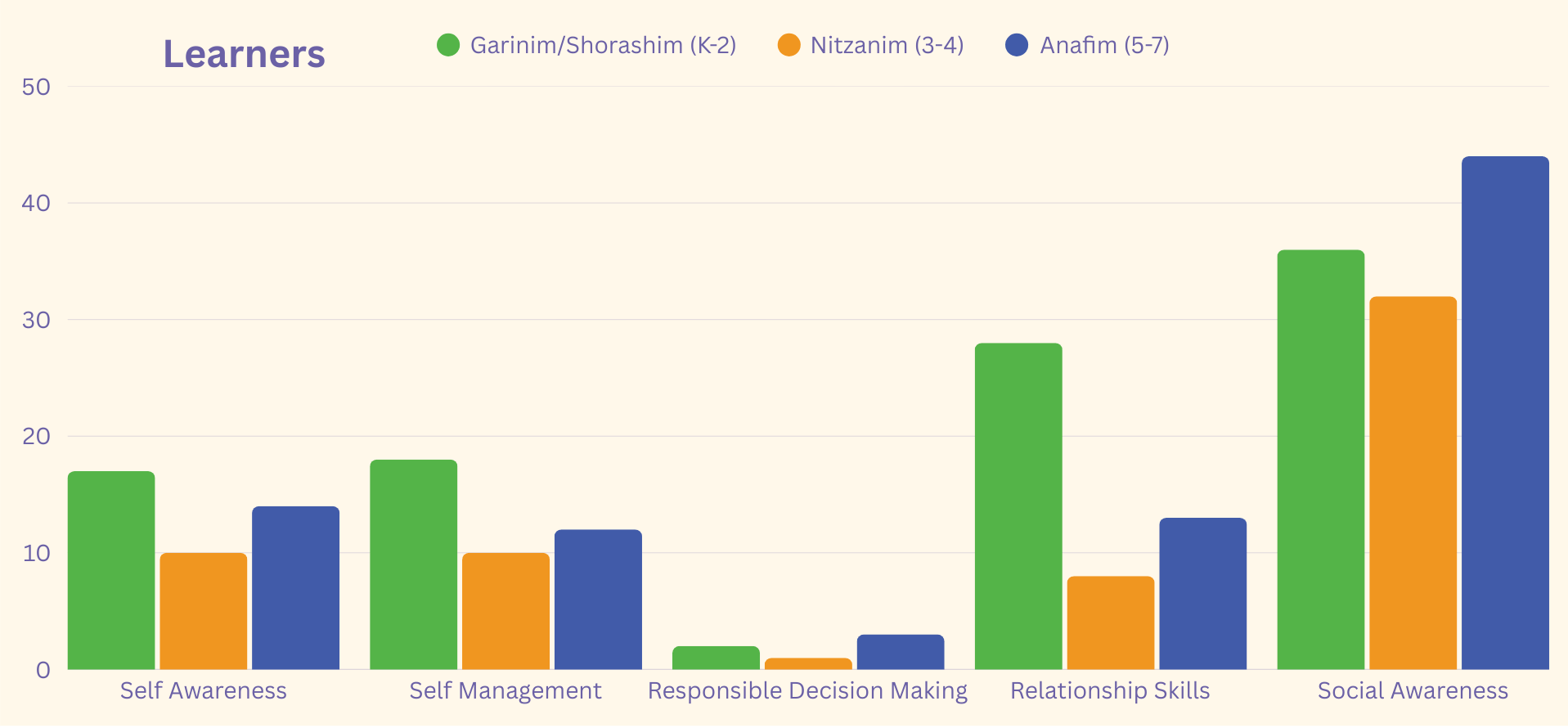
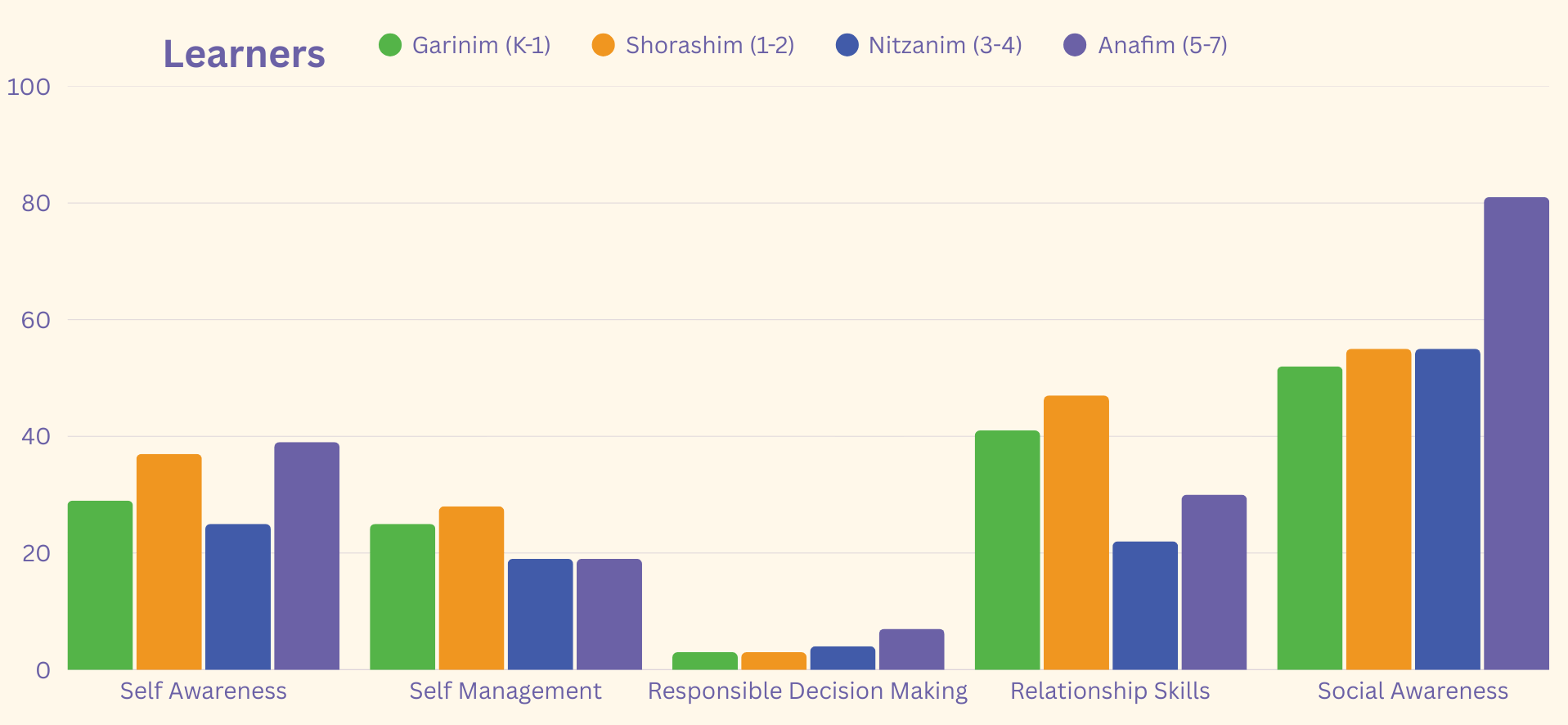
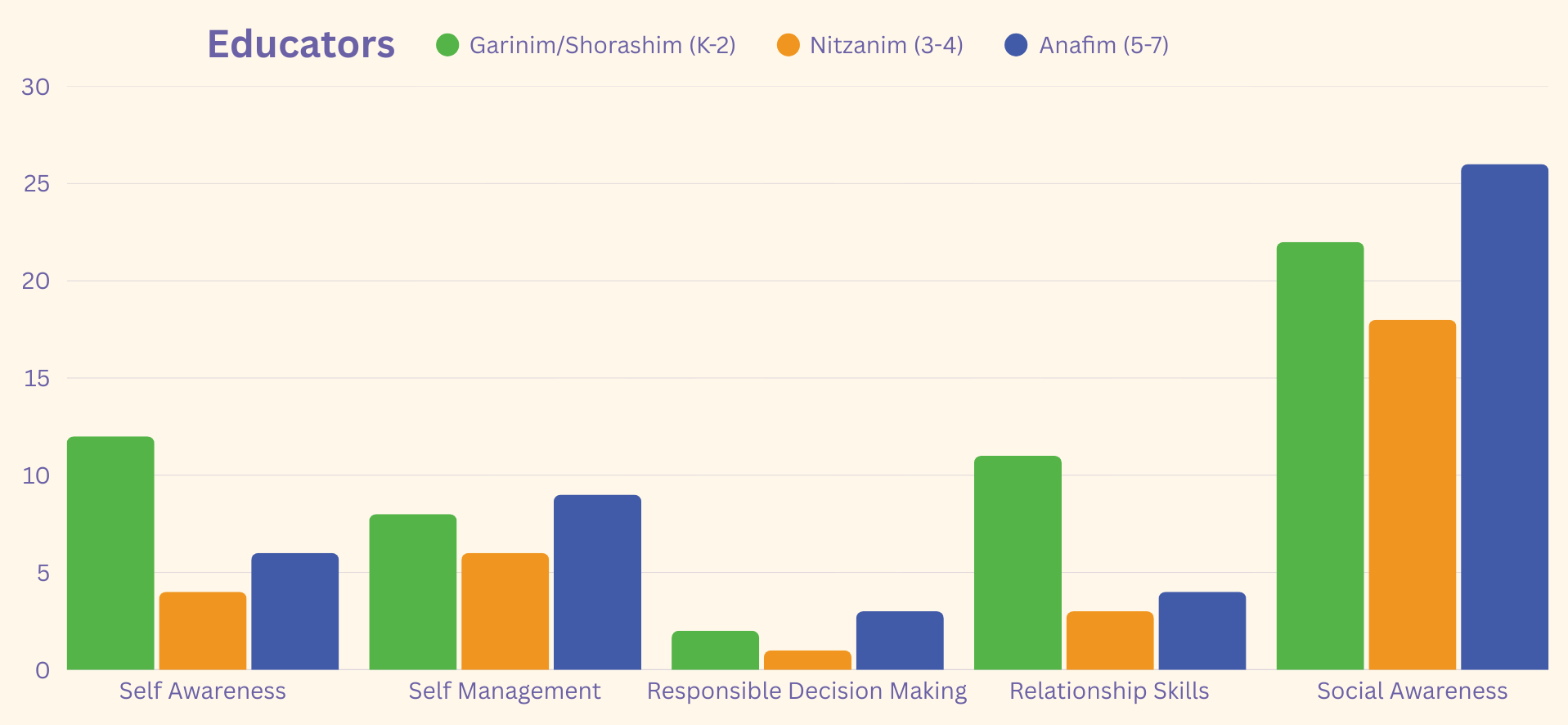
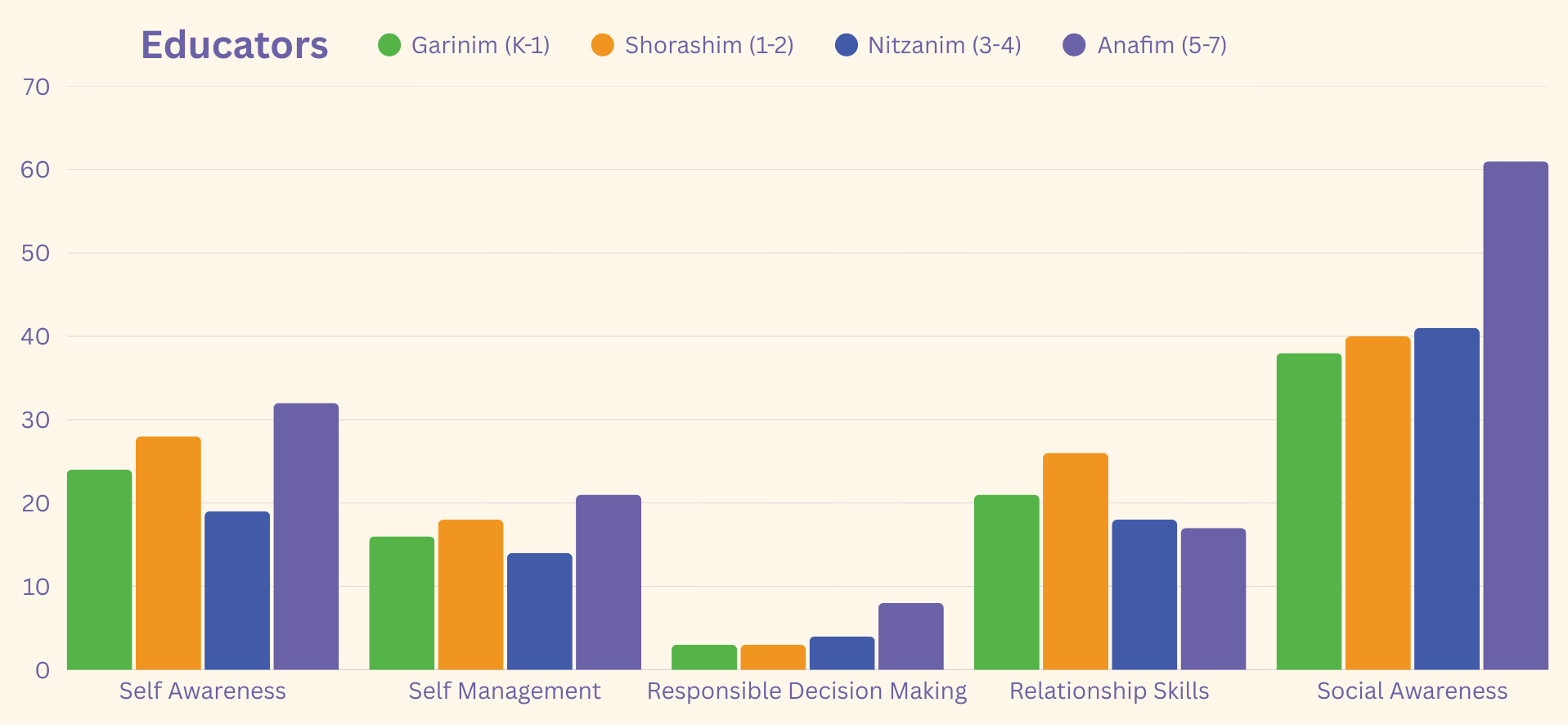
We answered this by tracking five areas of social and emotional skills – self-awareness, self-management, relationship skills, responsible decision-making, and social awareness – to notice in our learners. We hypothesized that our older learners would demonstrate more social awareness, while self-awareness and self-management would likely be the more common skills among younger learners.
After defining the skills, we observed and noted the skills learners demonstrated and the ways educators drew these connections. We collected baseline data from September 2nd through 18th to see what was happening before applying our new approach here. From the beginning, educators drew connections between Social and Emotional Learning (SEL) skills and text, and further supported these connections through their prompts and activities. From September 18th onward for Garinim and Shorashim (K-2nd grade), and from October 16th onward for Nitzanim (3rd-4th grade) and Anafim (5th-7th grade), these interventions were an intentional part of lesson planning and facilitation.
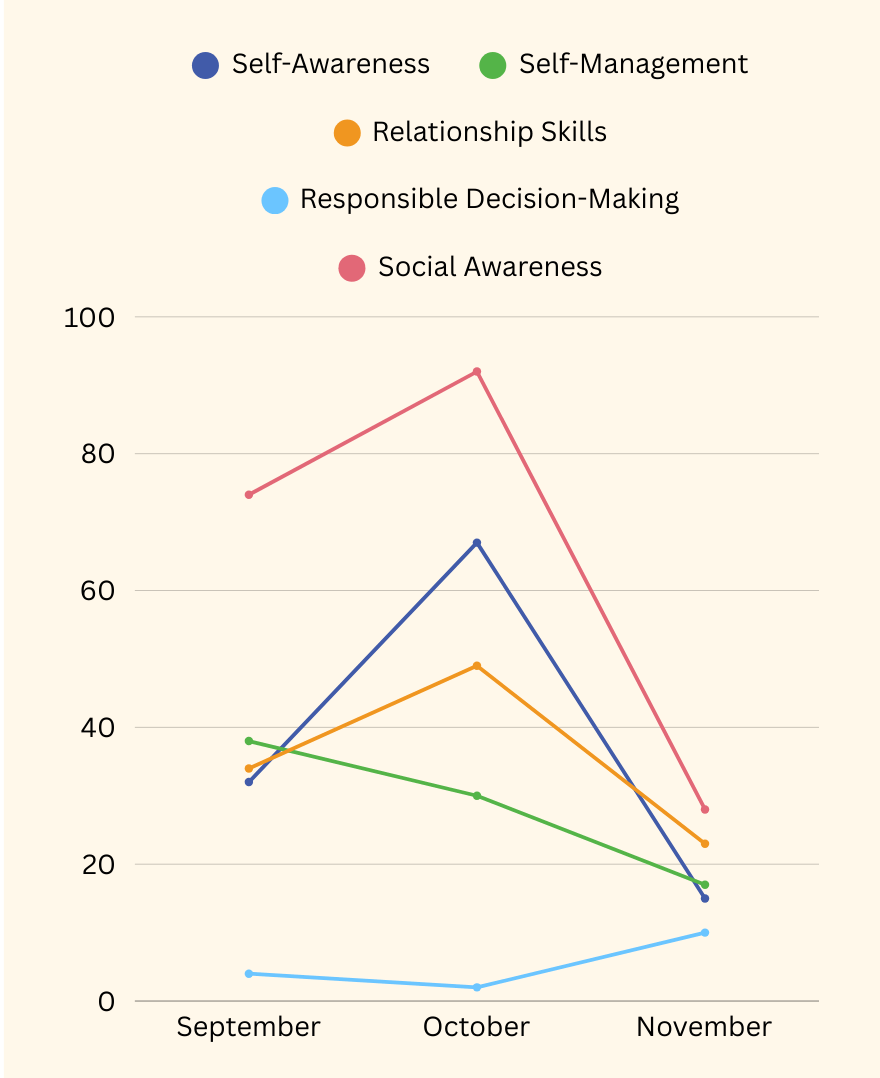
Early on, we saw a pattern emerging that did not support the hypothesis that older learners would demonstrate more social awareness and younger learners more self-awareness. Learners at all ages, from our kindergarten and first graders to fifth through seventh grade, all demonstrated social awareness above other skills. They connected text to observations in their own lives and to what they saw in the world around them with ease and frequency.
Younger learners also demonstrated relational skills more often than older learners throughout the unit, though the gap between older and younger learners’ demonstrations of this skill did narrow over the course of the unit. It may be less surprising that this age cohort would ask for help from adults, but nearly as frequently, they asked for and offered help to each other! Learners across age cohorts demonstrated similar self-awareness and self-management skills. Responsible decision-making was the least demonstrated skill, but that might be due to timing. At the beginning of the year, when educators are setting the structure and expectations for the year, there may be fewer opportunities for learners to make decisions, and learners may not yet be sufficiently comfortable in the space and with the newly (re)established routines to flex their decision-making skills. As we progressed into the quarter, we saw an increase in responsible decision-making, especially in connection with the learners’ creation of the brit (our two-way promise) – a direct invitation to learners to participate in the structure of their learning space.
Especially as we got deeper into our discussions of the brit, the communal contract learners co-create over the course of the first quarter, we saw them get more comfortable with expressing and pursuing what they need. Learners recognize that they are active builders of our community. We can acknowledge that the beginning of the year is a hard time for learners to fully act on their skills, and we both support and are excited for them to develop and build on those skills moving forward.
The realities of the beginning of the school year present challenges. Learners are new or returning to routines, High Holidays cause schedule disruptions, and new relationships form or change over the summer. Even the familiar feels different. We knew this moment would not be the easiest, and it was ripe for social-emotional skill work among all the newness.
In this first quarter, we’re setting the stage for learners’ continued skill development throughout the year – not everything can fit into the first act, but we’re opening the story of this school year focusing on connecting our developing social-emotional skills to Torah. There are a lot of factors we can’t predict about the beginning of the year. We are proud of the ways this creates a space where kids feel comfortable growing into themselves. We are excited to see all the ways they continue to do that with a strong focus on the skills they need to continue to build our community for months and years to come.