A research blog by:
Ari Morton, Makom Making Project Manager, and Nancy Gorosh, Educator & Research Assistant
On any afternoon at 4:00 PM, feelings can come quickly and powerfully, especially to our younger learners still very much building skills to manage those feelings. Being in community together presents many opportunities to support our young people in building skills for emotional self-management. Our research is poised to develop specific strategies to bring that to life. Makom Community’s action research drives and is rooted in our goals for Jewish Enrichment. Many of these goals pertain to learners’ individual and collective social and emotional skills, to how they and their families access and relate to Jewish Wisdom, and to how they engage with community.
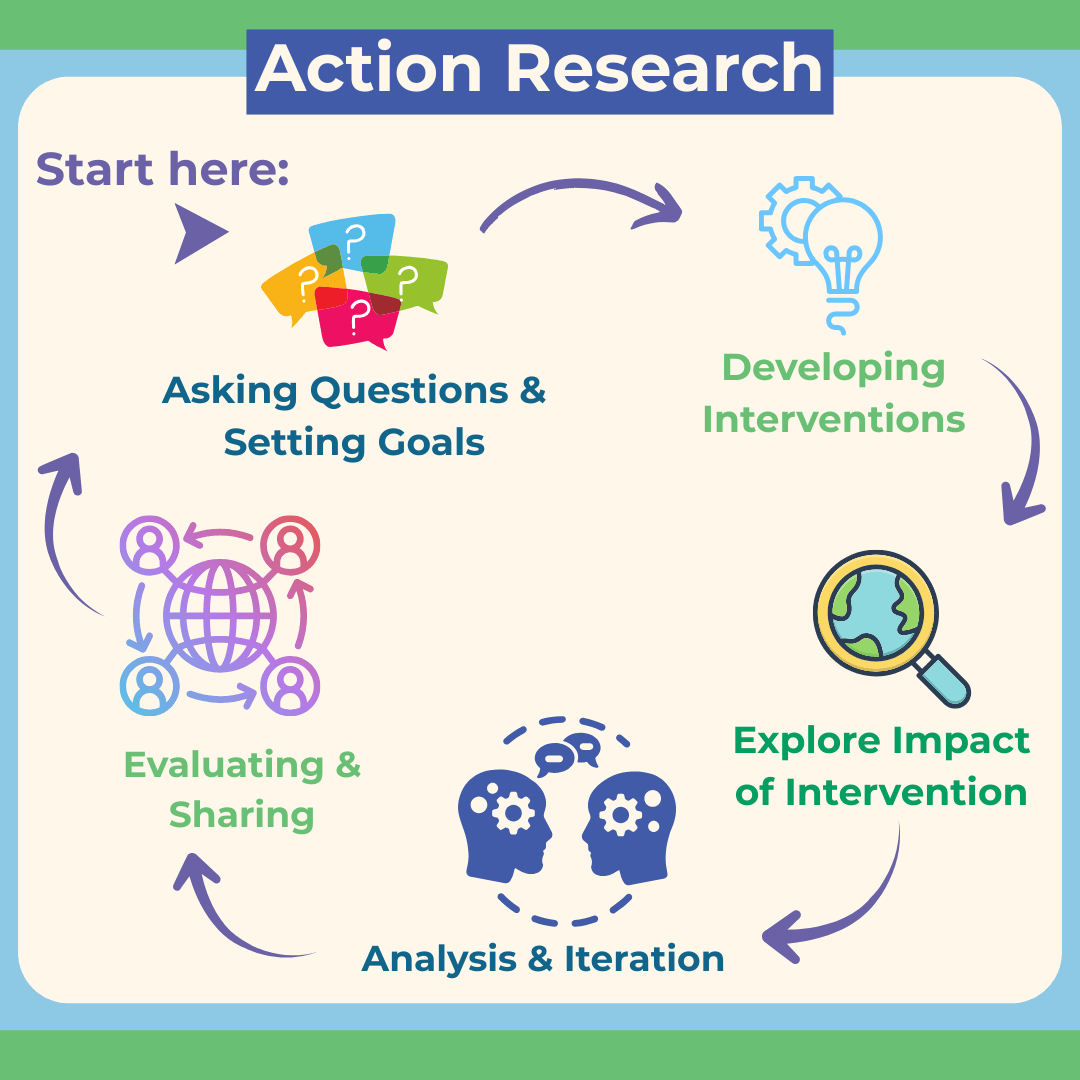
Our research structure consists of four questions, one per quarter, to help guide our educators as we support learners in developing skills, give them greater tools for connection, explore perspectives, and invite them to reflect and participate in this inquiry around Jewish Placemaking with us.
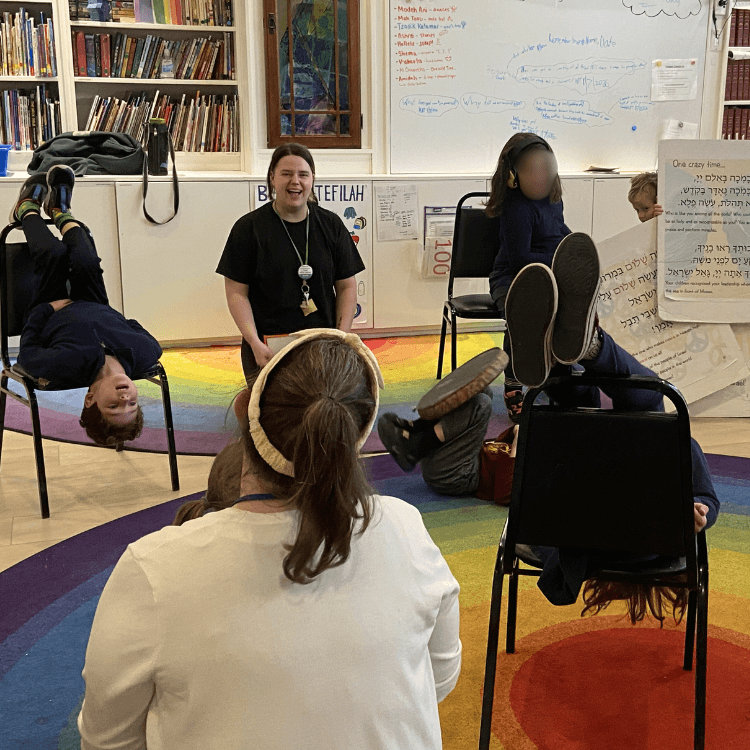
This quarter, we are delving into the question: How can teachers and learners work together to create a well-resourced classroom to support learners appropriately handling their own and each other’s emotions?
Collaboration is at the heart of this question, and our research observations have centered on ways learners have given their input on what they would need and find helpful, before and during the introduction of our research interventions. Over the course of this unit, as we collaborate with our learners about what supports them best, this intervention and set of resources have developed within each classroom.
Makom’s Research Assistant and Garinim (K-1) Educator, Nancy Gorosh, designed the interventions we’ve been utilizing, applying them first within her own cohort, and then meeting with the other educators to discuss how best to adapt them for our older grade learners.
Here’s a reflection from Nancy on this intervention:
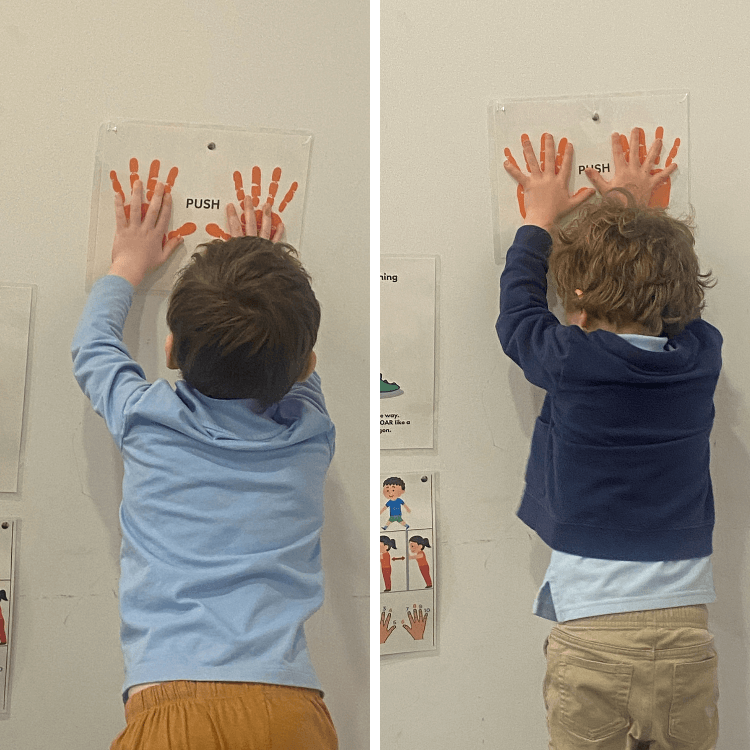
“For a week I had different options up on the wall for potential poster options and we took a vote, and I heard out all their opinions [about which regulation strategies appealed to them] before deciding what we would have up on the wall. Then I took the top hits, designed our resource posters, and started utilizing them in class. The kids use the push hands [poster] a lot! Big hit.
For adapting them [for older learners], I met with teachers and heard what their learners would utilize. I designed a box breathing [poster] for older learners as well as a push hands [poster]. So far, it seems push hands are a success among all ages.
Garinim also gets into the opening ritual and likes to suggest other ways and numbers and breathing tactics to use to help us refresh and reset.”
The opening ritual Nancy refers to was a marked transition between programming blocks. All learners in a cohort gather and hold up a specified number of fingers on each hand. They then switch between hands, slowly and rhythmically, as a form of bilateral stimulation meant to create a feeling of calm in their bodies. When this ritual was introduced in each class, educators explained this goal to learners, and made time for learners to discuss whether the ritual meets this goal for them, and even whether they agree with the stated goal.
Older learners have had a lot to say about the opening ritual, and in each cohort, it’s been modified, sometimes week-to-week. Throughout these modifications, we’ve had many fruitful discussions about the goals within each cohort. Learners appreciate the aim for balance between bringing the energy down and feeling calm in our bodies without feeling too tired.
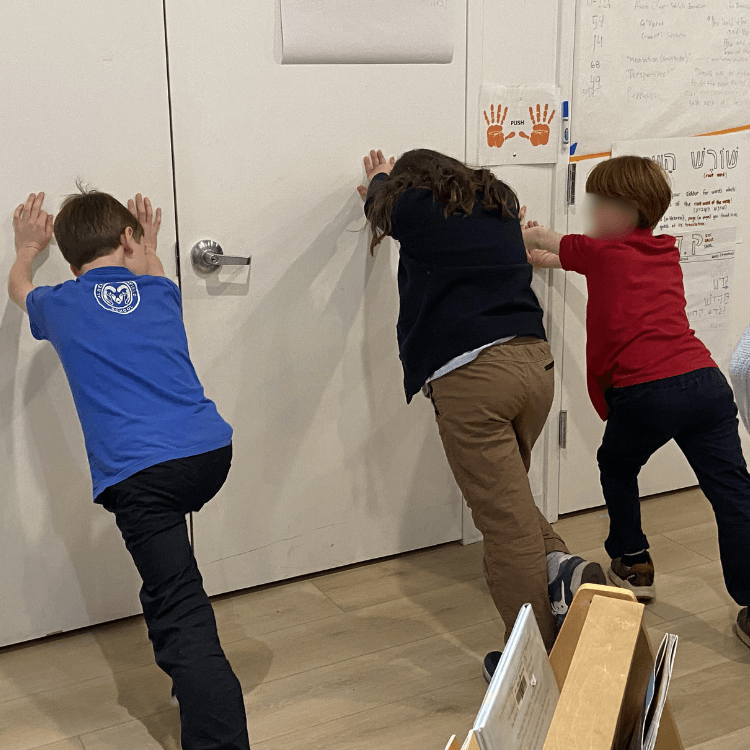
Our learners think and care so deeply about the impact they have on those around them, their shared learning environment, and the impact that environment has on them. Learners who need particular or more resources to set themselves up for success have been fantastic self-advocates, and their peers work with and encourage them to do what’s best for them. For some learners, that means extra snacks, designated areas of the room for them to take some space or do some handstands. They’re continuing to learn that in this makom – in this place – those are things they’re able to access.
Building a well-resourced classroom for emotional regulation helps with classroom management, but perhaps more importantly, it builds learners’ trust in their educators and in themselves.